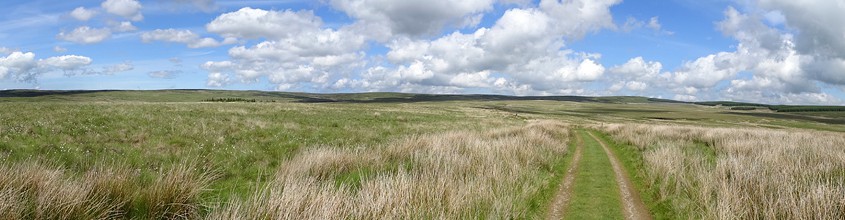
Gisteren heb ik een mooie lange langzame ronde gedaan. Vandaag kan ik gelukkig ook even op pad en ga ik wel kijken wat ik ga doen. Eerst warming up, daarna lekker RWR door het losloopgebied. Het is super rustig dus dat is erg fijn. Geen enge honden deze keer zoals gisteren. Het gaat niet echt lekker vlot maar ik voel me zwaar en moe. Bij het aanlijngebied gaat Fleur aan de riem en ga ik proberen tot het einde on stop en een beetje op tempo te lopen. Niet snel maar gewoon wel even tempo. Fleur gaat helaas weer naast me lopen maar dat zorgt er wel voor dat ik zelf loop en niet word voorgetrokken door haar. Bij het paadje langs de schaapspen ligt een mega verse drol die bij wijze van spreken nog bijna walmt en stinkt. Ik zie geloof ik ook verse voetsporen maar ik ben ook vooral aan het lopen. Ik ben wel alerter en kijk beter om me heen. Verderop zitten ook 2 raven dus de kans is erg groot dat er ook een prooi ligt. Maar ik loop verder en verdeel de route in stukjes. Eerst tot de afslag naar rechts, dan over het wolvenpad, oversteken en het laatste stukje naar het losloop gebied. Het gaat eigenlijk verrassend goed ook al is de ondergrond natuurlijk vrij ruk om tempo te lopen. Rul zand, hellingen etc. Maar goed, ik heb geen idee wat ik uitspook en loop gewoon door. Tegen het einde aan kijk ik eens naar de hartslag die natuurlijk wel gaat oplopen maar het valt me allemaal nog erg mee. Maximaal tik ik de 154 aan maar het blijft eigenlijk gewoon goed met gemiddelde hartslag van 135 op dit stukje. Het tempo is met 7.25 min/km ook helemaal niet zo slecht voor dit terrein en met mijn 3 maanden opbouw tot nu toe. Ik ben niet ontevreden eigenlijk dus op naar de volgende ronde! Tot mijn verrassing krijg ik alweer een postcard op de route. Blijkbaar een aardig aantal deze keer. Overigens erg mooi daar, dus wellicht iets om een keer echt te doen.
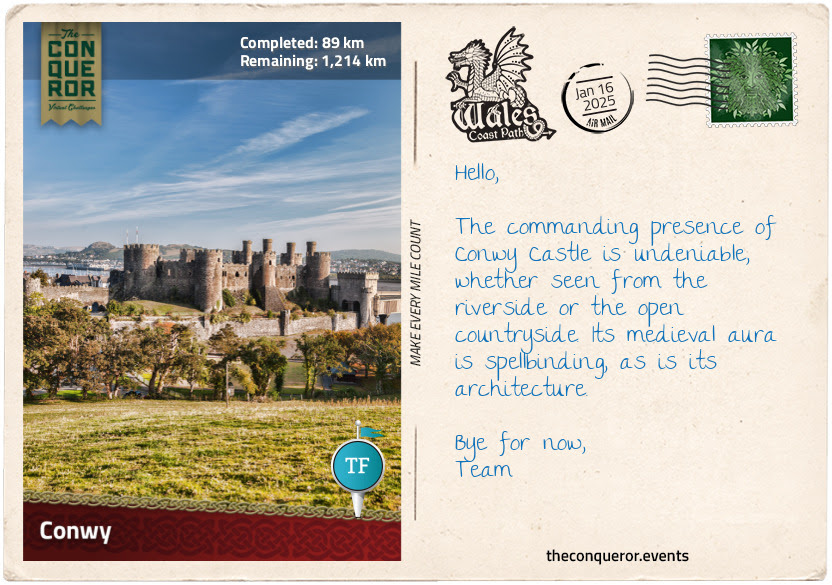
With great anticipation, I crossed the bridge over the River Conwy, where the National Trust’s Telford Suspension Bridge is situated parallel. This gothic-style 1800s bridge was designed by the renowned Scottish civil engineer and architect Thomas Telford. He was a pioneer in the early development of infrastructure and transportation systems during the Industrial Revolution, having been at the forefront of many projects such as the Caledonian Canal in Scotland, the Pontcysyllte Aqueduct and Port Penrhyn in Wales while improving and expanding Britain’s road network.
The suspension bridge led directly into the formidable medieval fortress, Conwy Castle. Standing guard over the River Conwy and the seaside town of the same name, the castle watched over this important river route that led into the heart of Wales. Built by King Edward I on his quest to conquer the last of the Welsh territories, the Kingdom of Gwynedd, the castle is one of a long chain of fortifications. Edward strategically erected nine castles around Gwynedd, encircling the northwest of Wales and establishing control. This collection of castles earned the nickname “Ring of Iron”.
Conwy Castle is an impressive fortress featuring eight huge towers with arrow slits for defense and a thick curtain wall connected to a one-mile (1.6km) town wall that is still remarkably well-preserved. On the upper exterior walls near the battlements are the remains of drop boxes (formally known as machicolations) where stones or other materials would be dropped on attackers. The main gate was via a drawbridge but is now long gone. With its near-oblong shape, the narrow ends of the castle had barbicans added for extra defense. Inside, the Great Hall used by the king for entertainment was supplemented with various other spaces that helped the castle function, from a cellar and kitchen to stables and blacksmith to a royal residence, chapels and, for the unlucky, a prison tower.
An interesting feature of Conwy Castle is the absence of a central keep that usually contained the royal apartments. The reason is a change in layout design focused on defense strategies, where strong walls and layered defenses became a priority after factoring in the rugged terrain, as opposed to a single central stronghold. This allowed for better protection and control of the surrounding area.
As the centuries passed, Conwy was besieged in the 15th century, when Welsh leader Owain Glyndŵr rose against English rule, wanting to reassert Welsh independence. Another two centuries later, the castle was entangled in the English Civil War, where it was held by Royalist forces and besieged by Parliamentarian troops. Following the war, the castle was partially slighted, stripped of its iron and lead, turning it into a ruin. Neglect set in until the 19th century, when restoration efforts were initiated to preserve its history.
Today, the castle maintains its vigil over the river’s banks. The medieval setting harmoniously coexists with the presence of roads and railways. In 1986, Conwy Castle and three other “Ring of Iron” castles were designated UNESCO World Heritage Sites.
gegevens:
* 7 km
* 5 graden
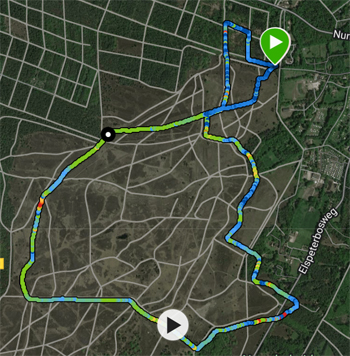
januari 92 km – 2025 totaal 92 km